Electronic Control Units (ECUs) are the core control modules used throughout modern vehicles. Engine management systems, battery management systems, ADAS modules, infotainment platforms, body control modules, and charging systems all rely on ECUs for reliable operation.
As vehicle electronics become increasingly complex, EMC testing for automotive ECU systems has become a critical requirement during product development and vehicle certification.
Automotive EMC testing ensures that ECUs can operate correctly in harsh electromagnetic environments without generating excessive electromagnetic interference.
Why ECU EMC Testing Is Important
Modern vehicles contain dozens or even hundreds of electronic control units.
These modules communicate through:
* CAN Bus
* LIN Bus
* Ethernet
* FlexRay
* Wireless communication systems
A single EMC issue can affect vehicle functions such as:
* Engine control
* Battery management
* Radar performance
* Camera systems
* Autonomous driving features
* Infotainment systems
For this reason, automotive manufacturers impose strict EMC requirements on ECU suppliers.
Common Automotive EMC Standards
Automotive EMC testing typically follows standards such as:
* ISO 11452
* CISPR 25
* ISO 7637
* UNECE R10
Among these standards, ISO 11452 is commonly used for radiated immunity evaluation, while CISPR 25 focuses on conducted and radiated emissions generated by vehicle electronic components.
Most OEM manufacturers also maintain proprietary EMC requirements that exceed standard industry limits.
Radiated Immunity Testing for ECUs
Radiated immunity testing evaluates ECU performance under RF electromagnetic field exposure.
Typical ISO 11452 test systems include:
* RF signal generator
* RF power amplifier
* EMC antenna
* Field probe
* Semi-anechoic chamber
Automotive immunity testing often requires significantly higher field strengths than standard commercial EMC testing.
To achieve stable field generation, laboratories commonly use high-power RF power amplifiers for automotive EMC testing.
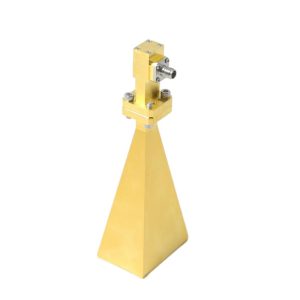
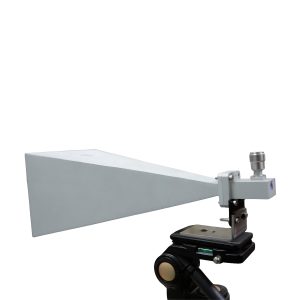
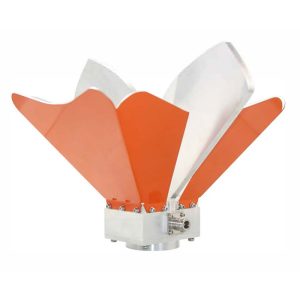
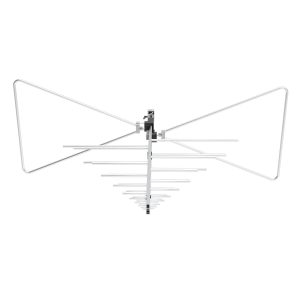
Depending on frequency range, engineers may select biconical antennas, log-periodic antennas, or horn antennas.
Conducted Immunity and Bulk Current Injection Testing
Automotive ECUs are highly sensitive to conducted disturbances entering through wiring harnesses.
Common conducted immunity methods include:
* Bulk Current Injection (BCI)
* Direct Power Injection (DPI)
* Conducted RF Immunity
These tests evaluate whether electromagnetic disturbances coupled onto cables can affect ECU functionality.
Proper grounding and harness design are often critical for successful test performance.
CISPR 25 Conducted and Radiated Emission Testing
CISPR 25 is one of the most important automotive EMC standards.
The objective is to limit electromagnetic emissions that could interfere with vehicle communication and electronic systems.
Testing commonly includes:
* Conducted emissions
* Radiated emissions
* Harness measurements
* Component-level evaluation
Laboratories frequently use LISN equipment for CISPR 25 conducted emission testing to measure power-line noise generated by ECUs and associated electronics.
Wiring Harnesses Are Often the Largest EMC Risk
Many ECU EMC failures are not caused by the module itself.
Instead, failures originate from:
* Harness routing
* Connector grounding
* Cable shielding
* Improper bonding
Long cable assemblies can behave as efficient antennas, significantly increasing both emissions and RF susceptibility.
Automotive EMC engineers typically evaluate complete ECU and harness configurations rather than testing modules in isolation.
EMC Chamber Requirements for Automotive Testing
Accurate automotive EMC testing requires controlled chamber environments.
Important factors include:
* Field uniformity
* Absorber performance
* Ground plane design
* Ambient RF noise levels
* Calibration accuracy
Automotive suppliers building internal EMC facilities often invest in complete automotive EMC laboratory setup solutions to support development testing before OEM certification.
These facilities allow engineering teams to perform debugging and design verification before formal compliance testing.
ECU EMC Performance Depends on System Integration
Successful automotive EMC performance is rarely determined by a single component.
The interaction between ECU hardware, PCB layout, enclosure design, grounding strategy, cable harnesses, and vehicle architecture ultimately determines compliance performance.
Manufacturers that incorporate EMC design reviews and pre-compliance testing early in development typically achieve significantly higher certification success rates than teams that wait until final validation testing.