How to Choose EMC Antennas for EMC Testing
Choosing the right EMC antenna is not just about frequency range or specifications on paper.
In real EMC testing, antenna selection directly affects measurement accuracy, test repeatability, and even whether a product passes compliance.
This guide explains how to select EMC antennas from a practical engineering perspective, covering antenna types, key parameters, and common mistakes seen in EMC laboratories.
Why EMC Antenna Selection Matters
In EMC testing, antennas are not just accessories—they are critical measurement components.
An inappropriate antenna can lead to:
- Incorrect emission readings
- Poor field uniformity in immunity testing
- Inconsistent or non-repeatable results
In many failed EMC tests, the issue is not the device under test, but the measurement setup itself.
Step 1: Define the Frequency Range
The first and most important step is identifying the frequency range required for your EMC testing.
Typical EMC test ranges include:
- Low frequency: kHz to MHz
- Radiated emission: usually above 30 MHz
- Immunity testing: up to several GHz
A broadband antenna can simplify setup, but may not always provide optimal performance across all frequencies.
In practice, many labs prefer fewer antenna swaps to improve efficiency, even if it means using a wider-band antenna.
Step 2: Choose the Right Antenna Type
Different EMC tests require different antenna types.
Broadband Horn Antennas
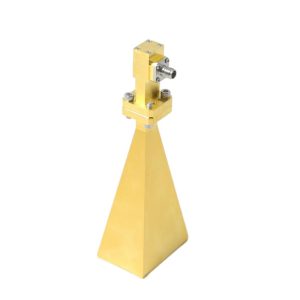
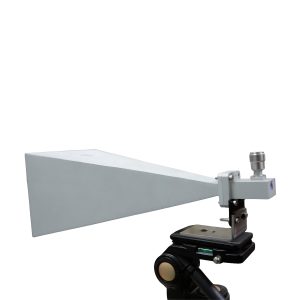
Broadband horn antennas are widely used for EMC testing above 1 GHz due to their stable gain and wide frequency coverage.

These antennas are typically used for lower frequency EMC measurements and provide good coverage in specific frequency bands.
When to Use Multiple Antennas
In high-accuracy EMC testing, multiple antennas may be required to cover different frequency ranges effectively.
Using a single antenna for all tests may simplify setup, but often compromises measurement accuracy.
Step 3: Understand Key Antenna Parameters
Gain
Antenna gain affects signal strength and measurement sensitivity.
Stable gain across frequency is more important than peak gain values.
VSWR (Voltage Standing Wave Ratio)
Low VSWR ensures good impedance matching and reduces signal reflection, improving measurement accuracy.
Polarization
Most EMC antennas use linear polarization, but orientation and positioning can significantly affect test results.
Power Handling
For immunity testing, antennas must handle high RF power without distortion or damage.
Step 4: Consider the Test Environment
The EMC test environment also affects antenna selection.
Common environments include:
- Semi-anechoic chambers
- Fully anechoic chambers
- Open-area test sites (OATS)
In smaller chambers, antenna size and placement can become limiting factors, especially at lower frequencies.
Common Mistakes When Selecting EMC Antennas
Based on practical EMC testing experience, common mistakes include:
- Choosing antennas based only on datasheets
- Ignoring chamber size and setup constraints
- Using overly wideband antennas without considering performance trade-offs
- Not verifying antenna calibration and positioning
How to Optimize EMC Antenna Setup
Proper antenna selection is only part of the process.
To achieve reliable EMC test results:
- Maintain consistent antenna positioning
- Ensure proper calibration
- Use appropriate test distances
- Minimize reflections and interference in the environment
Conclusion: Practical EMC Antenna Selection
Choosing EMC antennas requires balancing frequency coverage, performance, and real-world testing conditions.
A practical approach—combining technical specifications with testing experience—leads to more reliable EMC results and fewer compliance issues.
Need Help Selecting EMC Antennas?
If you are selecting EMC antennas for your test setup, our engineering team can provide practical guidance based on your frequency range, test environment, and application.