IEC 61000-4-3 is one of the most widely used EMC immunity standards for evaluating how electronic equipment performs when exposed to radio-frequency (RF) electromagnetic fields. The standard is commonly applied to industrial electronics, medical devices, communication equipment, consumer electronics, automotive components, and various wireless products.
Radiated immunity testing helps engineers determine whether a product can continue operating as intended when subjected to electromagnetic energy generated by nearby transmitters, wireless devices, industrial equipment, or other RF sources.
What Is IEC 61000-4-3?
IEC 61000-4-3 specifies a standardized test method for evaluating radiated RF immunity.
The purpose of the test is to expose a Device Under Test (DUT) to controlled electromagnetic fields and observe whether any performance degradation occurs during operation.
Typical performance issues observed during testing include:
* System reset
* Communication interruption
* Display flickering
* Sensor malfunction
* Data transmission errors
* Unexpected software behavior
The standard is widely referenced by product certification programs and is often used together with other EMC immunity standards such as IEC 61000-4-2, IEC 61000-4-4, IEC 61000-4-5, and IEC 61000-4-6.
Typical Test Frequency Range
Modern editions of IEC 61000-4-3 generally cover RF frequencies from:
80 MHz to 6 GHz
depending on product category and applicable regulatory requirements.
As wireless technologies continue expanding, manufacturers increasingly need to evaluate immunity performance at higher frequencies associated with cellular, Wi-Fi, Bluetooth, and IoT communications.
Basic Radiated Immunity Test Setup
A typical IEC 61000-4-3 radiated immunity test system includes:
* RF signal generator
* RF power amplifier
* EMC antenna
* Field probe
* Field monitoring system
* EMC chamber
* Control software
The signal generator produces the required RF signal, while the amplifier increases signal power to achieve the specified field strength level inside the test chamber.
For high-field-strength applications, engineers often use RF power amplifiers for EMC immunity testing to ensure stable field generation across the entire test frequency range.
EMC Antenna Selection
Antenna selection directly affects field strength efficiency and field uniformity performance.
Several antenna types are commonly used during IEC 61000-4-3 testing:
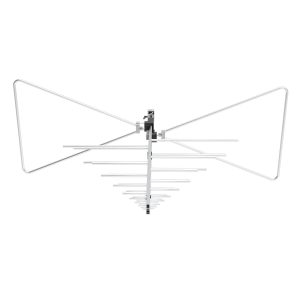
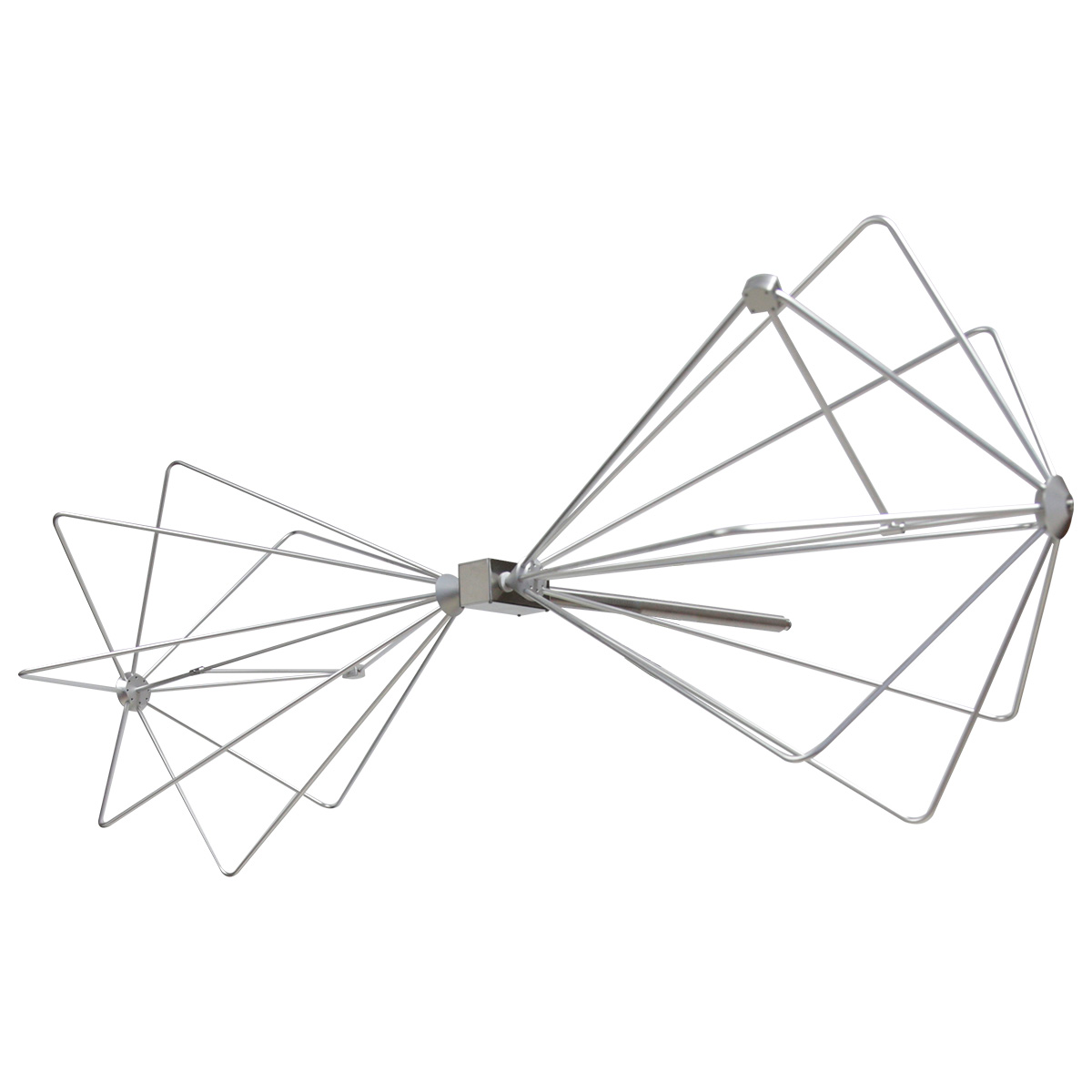
Biconical Antennas
Typically used at lower frequencies.
Applications include:
* 80 MHz to 300 MHz testing
* General EMC immunity measurements
* Pre-compliance EMC evaluation
Products such as biconical EMC antennas are widely used because of their broadband characteristics and stable performance.
Log-Periodic Antennas
Often used for mid-frequency EMC testing applications.
Advantages include:
* Broadband coverage
* Stable gain performance
* Repeatable measurements
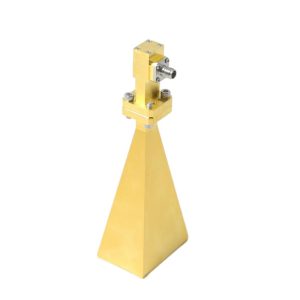
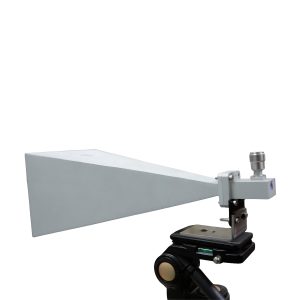
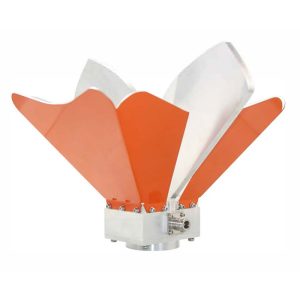
Double-Ridged Horn Antennas
Commonly used above 1 GHz.
These antennas provide:
* Higher gain
* Improved field generation efficiency
* Better high-frequency performance
Incorrect antenna selection may lead to insufficient field strength or excessive amplifier power requirements.
Field Uniformity Verification
One of the most important requirements in IEC 61000-4-3 testing is field uniformity verification.
Before the DUT is tested, engineers must verify that the electromagnetic field generated inside the chamber meets standard requirements across the defined test area.
Field probes are positioned at multiple calibration points to measure field distribution.
Poor field uniformity may result in:
* Invalid test results
* Excessive measurement uncertainty
* Inconsistent test repeatability
This is one reason why chamber quality, absorber performance, and antenna positioning are critical during EMC laboratory design.
Organizations building new EMC facilities often evaluate complete EMC laboratory setup solutions to ensure compliance with IEC 61000-4-3 calibration requirements.
Common Test Levels
IEC 61000-4-3 testing is commonly performed at field strengths such as:
* 3 V/m
* 10 V/m
* 20 V/m
* 30 V/m
Specific requirements depend on:
* Product category
* Regulatory requirements
* Industry standards
* Customer specifications
Automotive, military, aerospace, and industrial applications frequently require higher immunity levels than standard commercial products.
DUT Monitoring During Testing
Throughout the test process, the DUT remains operational while engineers monitor product performance.
Typical monitoring items include:
* Functional status
* Communication interfaces
* Sensor outputs
* Display operation
* Software behavior
* Power system stability
The objective is not simply to determine whether a product turns off, but whether its intended performance remains within acceptable limits during RF exposure.
Common Causes of IEC 61000-4-3 Test Failure
Many radiated immunity failures originate from electromagnetic coupling paths inside the product rather than from individual component defects.
Typical causes include:
Poor PCB Grounding
Improper grounding structures may increase RF susceptibility.
Common issues include:
* Long return paths
* Floating ground regions
* Poor chassis bonding
Cable Coupling
External cables often act as receiving antennas.
Problems frequently occur when:
* Cable routing is uncontrolled
* Shield termination is inadequate
* Connector grounding is poor
Insufficient Shielding
Enclosure gaps, seams, and poor conductive contact can allow RF energy to enter sensitive circuits.
Power Supply Susceptibility
RF energy may couple into power distribution networks and affect system operation.
Additional filtering and grounding improvements are often required to improve immunity performance.
Why Pre-Compliance Testing Is Important
Many EMC failures can be identified long before formal certification testing begins.
Pre-compliance radiated immunity testing allows engineers to:
* Identify RF coupling paths
* Verify shielding effectiveness
* Evaluate PCB susceptibility
* Optimize cable routing
* Reduce certification risk
For manufacturers developing wireless products, industrial electronics, or automotive components, pre-compliance testing often reduces overall development cost while improving EMC compliance success rates.