Accurate EMC testing depends not only on standards and procedures but also on the performance of the EMC measurement system itself.
Whether performing radiated emission testing, conducted emission testing, radiated immunity testing, or pre-compliance evaluation, the measurement system determines the reliability and repeatability of the final test results.
Understanding how an EMC measurement system works helps engineers select appropriate test equipment and identify potential sources of measurement uncertainty.
What Is an EMC Measurement System?
An EMC measurement system is a collection of instruments, antennas, sensors, software, and supporting equipment used to evaluate electromagnetic emissions and immunity performance.
A complete EMC measurement system may include:
* EMI receiver
* Spectrum analyzer
* EMC antennas
* LISN
* RF power amplifier
* Field probe
* Turntable system
* Antenna mast
* EMC chamber
Different combinations are used depending on the specific EMC standard being evaluated.
Conducted Emission Measurement System
Conducted emission testing evaluates electromagnetic noise transmitted through power lines.
A typical conducted emission measurement setup includes:
* LISN
* EMI receiver
* Test software
* Ground reference plane
The LISN provides a standardized impedance environment and routes noise signals to the measurement receiver.
The EMI receiver then measures conducted emissions across the required frequency range and compares results with applicable limits.
Conducted emission testing is commonly performed according to CISPR and FCC requirements.
Radiated Emission Measurement System
Radiated emission testing evaluates electromagnetic energy emitted through free space.
A typical radiated emission measurement system includes:
* EMI receiver
* EMC antenna
* Antenna mast
* Turntable
* Semi-anechoic chamber
The antenna receives RF energy emitted from the DUT and transfers the signal to the measurement receiver.
Different antenna types are selected based on frequency range.
Common EMC antenna categories include:
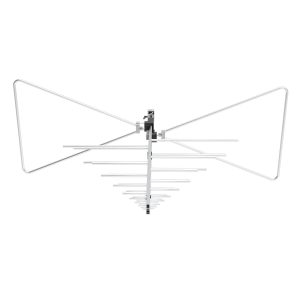
* Biconical antennas
* Log-periodic antennas
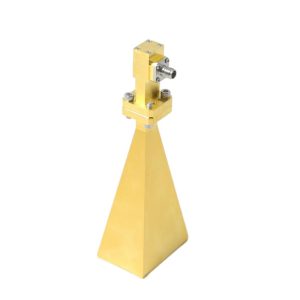
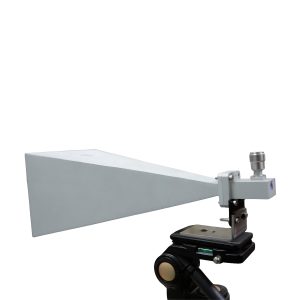
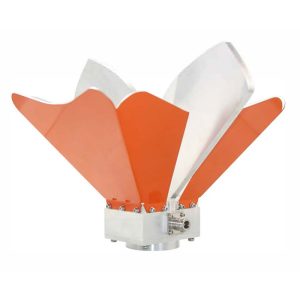
* Double-ridged horn antennas
Proper EMC antenna selection directly affects measurement accuracy and sensitivity.
Radiated Immunity Measurement System
Radiated immunity testing requires generating controlled RF electromagnetic fields rather than measuring emissions.
A typical radiated immunity system includes:
* RF signal generator
* RF power amplifier
* EMC antenna
* Field probe
* Control software
The signal generator creates RF signals which are amplified before being transmitted through the antenna.
High-field-strength applications frequently require RF power amplifiers for EMC immunity testing to maintain stable field levels throughout the test frequency range.
Field probes continuously monitor RF field strength during testing to ensure compliance with IEC 61000-4-3 requirements.
Role of EMC Chambers
EMC chambers provide controlled environments that reduce external interference and improve measurement repeatability.
Common chamber types include:
* Semi-anechoic chambers
* Full anechoic chambers
* Shielded rooms
Chamber performance directly affects:
* Ambient noise levels
* Measurement uncertainty
* Field uniformity
* Repeatability
Manufacturers building internal EMC laboratories often invest in complete EMC laboratory setup solutions that integrate chambers, antennas, amplifiers, software, and positioning systems into a unified testing platform.
Measurement Automation and Control Software
Modern EMC measurement systems rely heavily on automation software.
Software functions typically include:
* Equipment control
* Frequency scanning
* Data acquisition
* Limit line comparison
* Report generation
Automation improves testing efficiency and reduces operator-related variability.
This is particularly important for large EMC projects involving multiple standards and frequency ranges.
Factors Affecting EMC Measurement Accuracy
Several factors influence EMC measurement quality:
* Antenna calibration
* Chamber performance
* Cable losses
* Receiver sensitivity
* Amplifier stability
* Environmental RF noise
Regular equipment calibration and verification are essential for maintaining confidence in EMC test results.
Even small system inaccuracies can create significant measurement deviations when evaluating products near compliance limits.
Why EMC Measurement Systems Matter
An EMC test result is only as reliable as the measurement system used to obtain it.
Well-designed EMC measurement systems provide repeatable data, reduce uncertainty, and help engineers identify electromagnetic compatibility issues before products enter formal certification testing.
For manufacturers developing industrial electronics, automotive components, wireless products, and communication equipment, investing in accurate EMC measurement capability can significantly reduce development risk and improve compliance efficiency.