EMC test failure is one of the most common problems encountered during product certification and compliance evaluation. Many electronic products successfully pass functional testing but fail during EMC emission or immunity testing because electromagnetic interference behavior was not fully considered during product design.
EMC failures are especially common in industrial electronics, RF wireless devices, automotive electronics, medical systems, switching power supplies, and communication equipment.
This article explains the most common EMC test failure reasons, including grounding problems, shielding issues, PCB layout mistakes, cable coupling effects, and EMC test setup errors.
Poor PCB Grounding Design
Grounding problems are one of the leading causes of EMC test failure.
In high-frequency EMC environments, improper grounding can create unstable return current paths and increase unwanted electromagnetic radiation.
Typical grounding problems include:
– Split ground structures
– Long grounding traces
– Incomplete chassis bonding
– Shared noisy return paths
– Floating metal structures
Poor grounding often causes both radiated emission and immunity failures.
Many EMC issues can be significantly reduced through optimized PCB grounding layout and shorter high-frequency return paths.
Incorrect Cable Routing and Cable Coupling
External cables frequently become unintended antennas during EMC testing.
Long cable routing, unshielded cables, and poor connector grounding can easily introduce RF coupling problems.
Common symptoms include:
– Communication instability
– Unexpected system reset
– Noise peaks during radiated emission testing
– Radiated immunity malfunction
In practical EMC laboratories, cable arrangement is strictly controlled during testing because small routing changes may significantly affect EMC results.
Products used for conducted EMC evaluation such as LISN solutions for conducted emission testing are commonly integrated into EMC test setups to stabilize measurement conditions.
Insufficient Shielding Effectiveness
Shielding problems are another major cause of EMC compliance failure.
Typical shielding weaknesses include:
– Enclosure gaps
– Poor conductive contact
– Incomplete shielding seams
– Weak cable shielding termination
At higher frequencies, even small enclosure leakage points may generate significant RF radiation.
In immunity testing, poor shielding also allows external RF energy to couple directly into sensitive circuits.
Proper EMC chamber configuration and shielding integrity are essential for stable test environments, especially in EMC laboratory setup projects involving radiated immunity and radiated emission testing.
EMC Antenna and Chamber Setup Errors
Incorrect EMC test setup may lead to inaccurate measurements or unstable EMC results.
Common setup problems include:
– Incorrect antenna distance
– Improper antenna polarization
– Poor field uniformity
– Incorrect DUT positioning
– Unstable chamber calibration
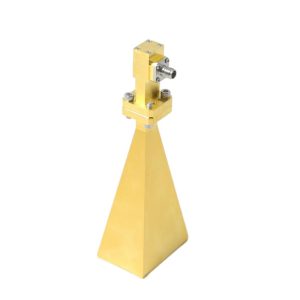
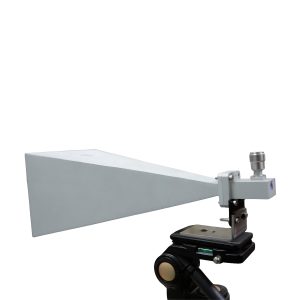
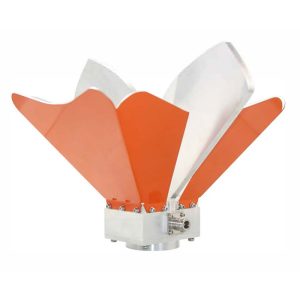
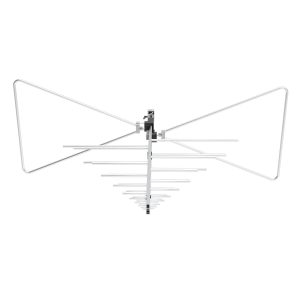
For radiated immunity testing, selecting suitable <a href=”/product/biconical-antenna/”>biconical antennas</a>, log-periodic antennas, or horn antennas is critical for maintaining repeatable RF field generation across different frequency ranges.
Many EMC laboratories use different antenna combinations depending on IEC 61000-4-3 test requirements and chamber size.
RF Power Amplifier Instability
High-field-strength EMC immunity testing requires stable RF amplification.
Insufficient amplifier linearity or unstable output power may cause:
– Field strength fluctuation
– Calibration errors
– Inconsistent immunity test results
High-power RF power amplifiers for EMC testing are commonly required for automotive EMC standards, military EMC testing, and large DUT immunity evaluation.
Amplifier selection directly affects EMC test repeatability.
Inadequate Filtering and Power Supply Noise
Switching power supplies often generate strong conducted noise.
Without proper filtering, conducted emission levels can easily exceed EMC standard limits.
Typical causes include:
– Weak EMI filtering
– Improper ferrite placement
– Poor DC grounding
– High switching frequency harmonics
Conducted EMC failures are especially common in industrial control systems and high-power electronic equipment.
Lack of EMC Pre-Compliance Testing
Many products enter formal certification testing without sufficient EMC debugging.
This significantly increases redesign risk and testing cost.
EMC pre-compliance testing allows engineers to identify:
– Noise sources
– RF coupling paths
– Shielding weaknesses
– PCB susceptibility issues
before official EMC certification.
Pre-compliance EMC systems are widely used during product R&D stages to improve first-pass compliance rates.