







In EMC pre-compliance testing, shielding boxes and anechoic chambers are both useful, but they are designed for different purposes. A shielding box is mainly used for early-stage troubleshooting and comparative testing, while an anechoic chamber is used for more accurate measurements and formal compliance evaluation. They are not direct substitutes.
A shielding box is a compact conductive enclosure that helps isolate the device under test from outside interference. It is commonly used to observe emission trends, compare design revisions, and support debugging during product development. Because it is relatively small, affordable, and easy to place inside an R&D environment, it is a practical tool for frequent internal checks.

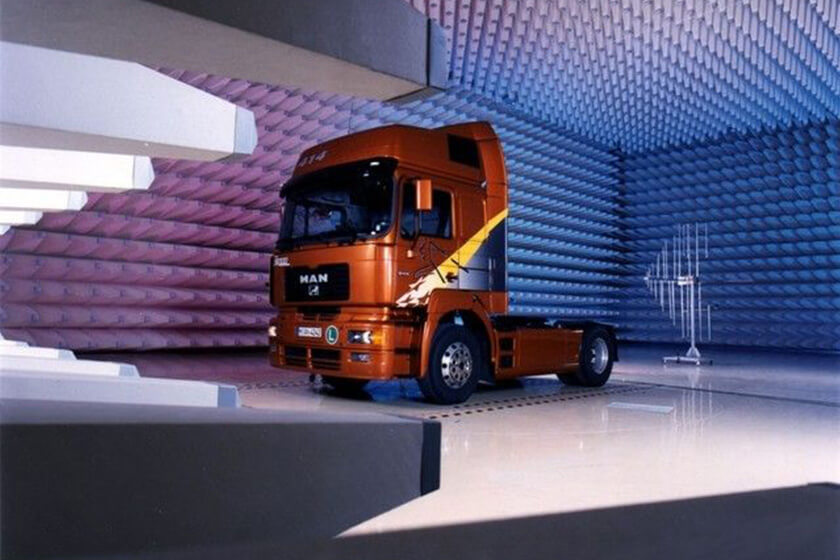
An anechoic chamber is a larger test environment that combines shielding with RF absorber materials to reduce reflections. This creates a measurement space that is closer to free-space conditions and provides more reliable, repeatable results. For this reason, anechoic chambers are typically used for chamber-based EMC measurements, certification preparation, and final compliance verification.

The biggest difference between the two lies in the quality of the test environment. A shielding box can help engineers understand whether a design change improves or worsens EMC performance, but it usually cannot provide highly accurate pass/fail judgment against regulatory limits. Internal reflections, limited antenna distance, cable placement, and DUT orientation restrictions can all affect the measurement. In other words, a shielding box is useful for trend analysis, but not ideal for absolute compliance confirmation.
An anechoic chamber, by contrast, provides a much better controlled environment. It allows more realistic measurement geometry and stronger correlation with formal EMC test methods. When a team needs quantitative data, compliance margin evaluation, or confidence before certification testing, an anechoic chamber is the better choice.
From a practical perspective, a shielding box is best suited for fast engineering work. It is valuable when the goal is to identify dominant noise sources, compare design changes, improve shielding effectiveness, or reduce EMC risk before going to a lab. It saves time, lowers development cost, and makes internal pre-checks easier to perform on a regular basis.
An anechoic chamber is best suited for later-stage validation. It becomes necessary when results need to be closer to standardized test conditions, when measurement uncertainty matters, or when a product is being prepared for formal compliance testing. It is the environment used to confirm readiness, not just guide development.
A useful way to understand the difference is this: a shielding box helps reduce the risk of EMC failure, while an anechoic chamber helps confirm compliance. Many development teams use both. The shielding box supports early debugging and repeated internal testing, while the anechoic chamber is used at key stages to verify whether the design is truly ready for formal EMC assessment.
For EMC pre-compliance work, choosing between the two depends on the question being asked. If the question is whether a design change made things better or worse, a shielding box is often enough. If the question is whether the product is close to meeting formal EMC requirements, an anechoic chamber is the more appropriate tool. Using them in the right sequence is often the most practical and cost-effective approach.