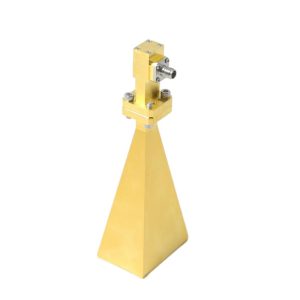
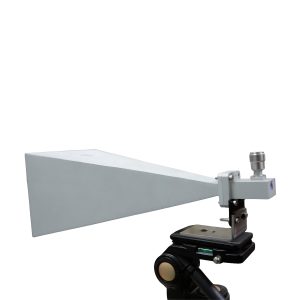
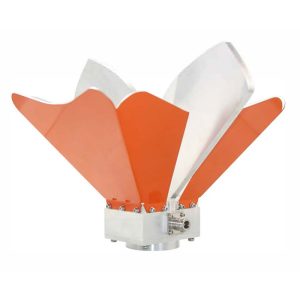
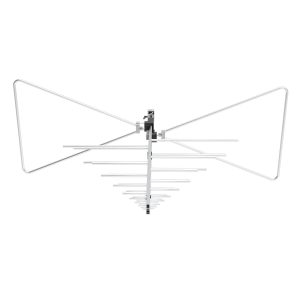
In EMC testing environments such as anechoic chambers, semi-anechoic chambers, and radiated emission test systems, antenna positioning accuracy is often underestimated. However, in practical measurement scenarios, it is one of the most influential factors affecting test repeatability, measurement uncertainty, and compliance reliability.
Keywords such as EMC antenna positioning system, radiated emission test setup, anechoic chamber antenna height scanning, and EMC test measurement uncertainty are increasingly associated with engineering searches because laboratories are paying more attention to system-level consistency rather than isolated instrument performance.

Antenna positioning directly determines the spatial relationship between the antenna and the device under test (DUT). In radiated emission testing, even when using calibrated receivers, standard-compliant antennas, and well-designed chambers, slight deviations in antenna height, distance, or angular orientation can change the measured field strength results. This effect becomes more significant at higher frequencies, where wavelength is shorter and spatial sensitivity is higher.
Search terms such as EMC radiated emission variability, antenna height error impact EMC test, and EMC chamber measurement deviation causes reflect a common engineering concern: why identical test setups can still produce different results.
In many EMC laboratories, variation is not caused by major system errors but by small mechanical inconsistencies. Manual antenna positioning, mechanical backlash in elevation structures, or inconsistent azimuth rotation can introduce differences between test runs. These differences are often small in physical scale but large enough to influence peak detection results, margin-to-limit evaluation, and even pass/fail decisions in borderline cases.
This is particularly critical in CISPR 16 radiated emission compliance testing, where repeatability and reproducibility are essential. Engineers searching for EMC test repeatability improvement, radiated emission test uncertainty sources, or EMC measurement consistency issues are typically trying to solve exactly this type of problem.
As EMC testing moves toward higher automation, antenna positioning is increasingly integrated into multi-axis motion systems and software-controlled test sequences. In modern EMC test systems, positioning is no longer a manual adjustment task but part of a synchronized measurement workflow that includes antenna height scanning, turntable rotation, and receiver data acquisition.
Search behavior such as automated EMC test system integration, multi-axis antenna positioning system EMC, and EMC chamber automation workflow shows a clear trend: laboratories are shifting from operator-dependent setups to repeatable system-driven configurations.
When antenna movement is controlled through precision positioning mechanisms, the spatial repeatability of measurements improves significantly. This reduces variability between operators, between test days, and even between different test sites. It also improves correlation between pre-compliance testing and formal certification testing.
In practical engineering terms, antenna positioning accuracy affects not only absolute measurement values but also the stability of peak detection during scans. During height scans or azimuth sweeps, inconsistent positioning can shift the detected maximum emission point, leading to different peak values even when the device under test remains unchanged.
This is why search queries like EMC peak emission variation causes, why EMC test results differ between labs, and antenna alignment error EMC measurement are commonly associated with real-world troubleshooting scenarios in EMC engineering practice.
As EMC test environments become more complex and automated, antenna positioning systems are increasingly seen as part of the measurement integrity chain rather than mechanical support structures. The accuracy of motion control, repeatability of positioning paths, and stability of scan routines directly influence the credibility of EMC test results in regulated environments such as automotive EMC, aerospace EMC, and industrial product compliance testing.
Search interest in EMC test system accuracy improvement, radiated emission automation solution, and anechoic chamber positioning precision system reflects this shift toward system-level thinking in EMC engineering workflows.